 Education Tax Credits: Two Benefits to Help You Pay for College
Did you pay for college in 2014? If you did it can mean tax savings on your federal tax return. There are two education credits that can help you with the cost of higher education. The credits may reduce the amount of tax you owe on your tax return. Here are some important facts you should know about education tax credits.
American Opportunity Tax Credit:
- You may be able to claim up to $2,500 per eligible student.
- The credit applies to the first four years at an eligible college or vocational school.
- It reduces the amount of tax you owe. If the credit reduces your tax to less than zero, you may receive up to $1,000 as a refund.
- It is available for students earning a degree or other recognized credential.
- The credit applies to students going to school at least half-time for at least one academic period that started during the tax year
- Costs that apply to the credit include the cost of tuition, books and required fees and supplies.
- Lifetime Learning Credit:
- The credit is limited to $2,000 per tax return, per year.
- The credit applies to all years of higher education. This includes classes for learning or improving job skills.
- The credit is limited to the amount of your taxes.
- Costs that apply to the credit include the cost of tuition, required fees, books, supplies and equipment that you must buy from the school.
For both credits:
- The credits apply to an eligible student. Eligible students include yourself, your spouse or a dependent that you list on your tax return.
- You must file Form 1040A or Form 1040 and complete Form 8863, Education Credits, to claim these credits on your tax return.
- Your school should give you a Form 1098-T, Tuition Statement, showing expenses for the year. This form contains helpful information needed to complete Form 8863. The amounts shown in Boxes 1 and 2 of the form may be different than what you actually paid. For example, the form may not include the cost of books that qualify for the credit.
- You can’t claim either credit if someone else claims you as a dependent.
- You can’t claim both credits for the same student or for the same expense, in the same year.
- The credits are subject to income limits that could reduce the amount you can claim on your return.
Education tax credits are covered in the Lesson 18 of the Federal Income Tax Course

Checking the status of your IRS Tax Refund
WASHINGTON — The Internal Revenue Service today reminded taxpayers that they can quickly check the status of their tax return and refund through “Where’s My Refund?”
Taxpayers who have not yet received their refunds can use “Where’s My Refund?” on IRS.gov or on the smartphone application IRS2Go 5.0 to find out about the status of their income tax refunds.
Initial information will normally be available within 24 hours after the IRS receives the taxpayer’s e-filed return or four weeks after the taxpayer mails a paper return to the IRS. The system updates only once every 24 hours, usually overnight, so there’s no need to check more often.
“Where’s My Refund? is the quickest and easiest way for taxpayers to get important information about their tax refund,” said IRS Commissioner John Koskinen. “Taxpayers need to remember that the Where’s My Refund system is updated every 24 hours, usually overnight, so there’s no need to check more than once a day.”
So far this year, “Where’s My Refund?” has received more than 179 million hits on IRS.gov.
Taxpayers should have their Social Security number, filing status and exact refund amount when accessing Where’s My Refund?
Other tips in the Tax Time Guide series are available on IRS.gov.
See this AP Press Article:
IRS cuts taxpayer services as filing returns gets harder
By STEPHEN OHLEMACHER, Associated Press
WASHINGTON (AP) — The IRS is cutting taxpayer services to historically low levels just as President Barack Obama’s health law will make filing a federal tax return more complicated for millions of families.
Got a question for IRS? Good luck reaching someone by phone. The tax agency says only half of the 100 million people expected to call this year will be able to reach a person.
Callers who get through may have to wait on hold for 30 minutes or more to talk to a person who will answer only the simplest questions.
“As we enter 2015, we are deeply concerned that taxpayers are receiving markedly less assistance from the IRS now than at any time in recent history,” said a report released Wednesday by agency watchdog Nina E. Olson.
IRS Commissioner John Koskinen says budget cuts are forcing the agency to reduce taxpayer services and other functions. The number of audits will decline, technology upgrades will be delayed and the agency might be forced to shut down and furlough workers for two days later this year, Koskinen said.
“People who file paper tax returns could wait an extra week — or possibly longer — to see their refund,” Koskinen said in an email to IRS employees this week. “We now anticipate an even lower level of telephone service than before, which raises the real possibility that fewer than half of taxpayers trying to call us will actually reach us.”
“Those who do reach us will face extended wait times that are unacceptable to all of us.” Koskinen added.
Congress cut the IRS budget by $346 million for the budget year that ends in September 2015. The $10.9 billion budget is $1.2 billion less than the agency received in 2010.
Republicans in Congress adamantly oppose Obama’s health law, so some have been working to starve the IRS of funds just as its role in implementing the law ramps up.
Olson is the National Taxpayer Advocate, an independent office within the Internal Revenue Service. She released her annual report to Congress Wednesday, less than a week before the start of tax filing season on Tuesday.
She said taxpayers will suffer from service reductions.
“Without adequate support, many taxpayers will be frustrated, some will make potentially costly mistakes, others will incur higher compliance costs when forced to seek information and assistance from tax professionals,” Olson wrote.
“Still others,” Olson said, “will simply give up and not file.”
For the first time, tax filers will have to report information about their health insurance during the previous year. For people who get health coverage through work or government programs like Medicaid, it will mean simply checking a box on their tax return.
Others who got insurance through state and federal marketplaces will have to file a new form, while people who received government subsidies to help pay premiums will have to provide more detailed information.
People who didn’t have health insurance last year face fines unless they qualify for a waiver, which requires more paperwork.
The subsidies were based on projected family incomes, so families will have to check to see if their actual incomes were higher or lower. If their incomes were higher than expected, they might have to pay back some of the subsidy, either through a smaller tax refund or a payment.
If their incomes were lower, they might qualify for a larger subsidy, which would come in the form of a larger tax refund.

The Internal Revenue Service issued a consumer alert providing taxpayers with additional tips to protect themselves from telephone scam artists calling and pretending to be with the IRS.
These callers may demand money or may say you have a refund due and try to trick you into sharing private information. These con artists can sound convincing when they call. They may know a lot about you, and they usually alter the caller ID to make it look like the IRS is calling. They use fake names and bogus IRS identification badge numbers. If you don’t answer, they often leave an “urgent” callback request.
“These telephone scams are being seen in every part of the country, and we urge people not to be deceived by these threatening phone calls,” IRS Commissioner John Koskinen said. “We have formal processes in place for people with tax issues. The IRS respects taxpayer rights, and these angry, shake-down calls are not how we do business.”
The IRS reminds people that they can know pretty easily when a supposed IRS caller is a fake. Here are five things the scammers often do but the IRS will not do. Any one of these five things is a tell-tale sign of a scam.
The IRS will never:
- Call you about taxes you owe without first mailing you an official notice.
- Demand that you pay taxes without giving you the opportunity to question or appeal the amount they say you owe.
- Require you to use a specific payment method for your taxes, such as a prepaid debit card.
- Ask for credit or debit card numbers over the phone.
- Threaten to bring in local police or other law-enforcement groups to have you arrested for not paying.
If you get a phone call from someone claiming to be from the IRS and asking for money, here’s what you should do:
- If you know you owe taxes or think you might owe, call the IRS at 1.800.829.1040. The IRS workers can help you with a payment issue.
- If you know you don’t owe taxes or have no reason to believe that you do, report the incident to the Treasury Inspector General for Tax Administration (TIGTA) at 1.800.366.4484 or at www.tigta.gov.
- If you’ve been targeted by this scam, also contact the Federal Trade Commission and use their “FTC Complaint Assistant” at FTC.gov. Please add “IRS Telephone Scam” to the comments of your complaint.
Remember, too, the IRS does not use email, text messages or any social media to discuss your personal tax issue. For more information on reporting tax scams, go to www.irs.gov and type “scam” in the search box.
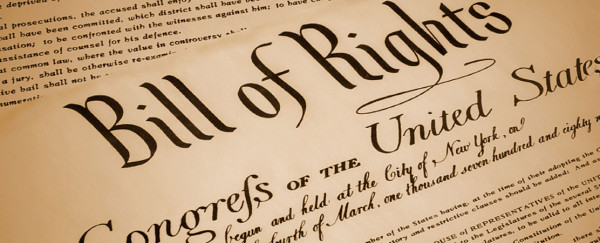
WASHINGTON ― The Internal Revenue Service announced the adoption of a “Taxpayer Bill of Rights” that will become a cornerstone document to provide the nation’s taxpayers with a better understanding of their rights.
The Taxpayer Bill of Rights takes the multiple existing rights embedded in the tax code and groups them into 10 broad categories, making them more visible and easier for taxpayers to find on IRS.gov.
Publication 1, “Your Rights as a Taxpayer,” has been updated with the 10 rights and will be sent to millions of taxpayers this year when they receive IRS notices on issues ranging from audits to collection. The rights will also be publicly visible in all IRS facilities for taxpayers and employees to see.
“The Taxpayer Bill of Rights contains fundamental information to help taxpayers,” said IRS Commissioner John A. Koskinen. “These are core concepts about which taxpayers should be aware. Respecting taxpayer rights continues to be a top priority for IRS employees, and the new Taxpayer Bill of Rights summarizes these important protections in a clearer, more understandable format than ever before.”
The IRS released the Taxpayer Bill of Rights following extensive discussions with the Taxpayer Advocate Service, an independent office inside the IRS that represents the interests of U.S. taxpayers. Since 2007, adopting a Taxpayer Bill of Rights has been a goal of National Taxpayer Advocate Nina E. Olson, and it was listed as the Advocate’s top priority in her most recent Annual Report to Congress.
“Congress has passed multiple pieces of legislation with the title of ‘Taxpayer Bill of Rights,'” Olson said. “However, taxpayer surveys conducted by my office have found that most taxpayers do not believe they have rights before the IRS and even fewer can name their rights. I believe the list of core taxpayer rights the IRS is announcing today will help taxpayers better understand their rights in dealing with the tax system.”
The tax code includes numerous taxpayer rights, but they are scattered throughout the code, making it difficult for people to track and understand. Similar to the U.S. Constitution’s Bill of Rights, the Taxpayer Bill of Rights contains 10 provisions. They are:
- The Right to Be Informed
- The Right to Quality Service
- The Right to Pay No More than the Correct Amount of Tax
- The Right to Challenge the IRS’s Position and Be Heard
- The Right to Appeal an IRS Decision in an Independent Forum
- The Right to Finality
- The Right to Privacy
- The Right to Confidentiality
- The Right to Retain Representation
- The Right to a Fair and Just Tax System
The rights have been incorporated into a redesigned version of Publication 1, a document that is routinely included in IRS correspondence with taxpayers. Millions of these mailings go out each year. The new version has been added to IRS.gov, and print copies will start being included in IRS correspondence in the near future.
The timing of the updated Publication 1 with the Taxpayer Bill of Rights is critical because the IRS is in the peak of its correspondence mailing season as taxpayers start to receive follow-up correspondence from the 2014 filing season. The publication initially will be available in English and Spanish, and updated versions will soon be available in Chinese, Korean, Russian and Vietnamese.
The IRS has also created a special section of IRS.gov to highlight the 10 rights. The web site will continue to be updated with information as it becomes available, and taxpayers will be able to easily find the Bill of Rights from the front page. The IRS internal web site for employees is adding a special section so people inside the IRS have easy access as well.
As part of this effort, the IRS will add posters and signs in coming months to its public offices so taxpayers visiting the IRS can easily see and read the information.
“This information is critically important for taxpayers to read and understand,” Koskinen said. “We encourage people to take a moment to read the Taxpayer Bill of Rights, especially when they are interacting with the IRS. While these rights have always been there for taxpayers, we think the time is right to highlight and showcase these rights for people to plainly see.”
“I also want to emphasize that the concept of taxpayer rights is not a new one for IRS employees; they embrace it in their work every day,” Koskinen added. “But our establishment of the Taxpayer Bill of Rights is also a clear reminder that all of the IRS takes seriously our responsibility to treat taxpayers fairly.
Koskinen added, “The Taxpayer Bill of Rights will serve as an important education tool, and we plan to highlight it in many different forums and venues.”
What to do if You Get a Notice from the IRS
Each year the IRS mails millions of notices. Here’s what you should do if you receive a notice from the IRS:
1. Don’t ignore it. You can respond to most IRS notices quickly and easily. And it’s important that you reply promptly.
2. IRS notices usually deal with a specific issue about your tax return or tax account. For example, it may say the IRS has corrected an error on your tax return. Or it may ask you for more information.
3. Read it carefully and follow the instructions about what you need to do.
4. If it says that the IRS corrected your tax return, review the information in the notice and compare it to your tax return.
If you agree, you don’t need to reply unless a payment is due.
If you don’t agree, it’s important that you respond to the IRS. Write a letter that explains why you don’t agree. Make sure to include information and any documents you want the IRS to consider. Include the bottom tear-off portion of the notice with your letter. Mail your reply to the IRS at the address shown in the lower left part of the notice. Allow at least 30 days for a response from the IRS.
5. You can handle most notices without calling or visiting the IRS. If you do have questions, call the phone number in the upper right corner of the notice. Make sure you have a copy of your tax return and the notice with you when you call.
6. Keep copies of any notices you get from the IRS.
7. Don’t fall for phone and phishing email scams that use the IRS as a lure. The IRS first contacts people about unpaid taxes by mail – not by phone. The IRS does not contact taxpayers by email, text or social media about their tax return or tax account.
For more on this topic visit IRS.gov. Click on ‘Responding to a Notice’ at the bottom left of the home page. Also see Publication 594, The IRS Collection Process. You can get it on IRS.gov or call 800-TAX-FORM (800-829-3676) to get it by mail.
WASHINGTON — the Internal Revenue Service issued another strong warning for consumers to guard against sophisticated and aggressive phone scams targeting taxpayers, including recent immigrants, as reported incidents of this crime continue to rise nationwide. These scams won’t likely end with the filing season so the IRS urges everyone to remain on guard.

The IRS will always send taxpayers a written notification of any tax due via the U.S. mail. The IRS never asks for credit card, debit card or prepaid card information over the telephone. For more information or to report a scam, go to www.irs.gov and type “scam” in the search box.
People have reported a particularly aggressive phone scam in the last several months. Immigrants are frequently targeted. Potential victims are threatened with deportation, arrest, having their utilities shut off, or having their driver’s licenses revoked. Callers are frequently insulting or hostile – apparently to scare their potential victims.
Potential victims may be told they are entitled to big refunds, or that they owe money that must be paid immediately to the IRS. When unsuccessful the first time, sometimes phone scammers call back trying a new strategy.
Other characteristics of this scam include:
• Scammers use fake names and IRS badge numbers. They generally use common names and surnames to identify themselves.
• Scammers may be able to recite the last four digits of a victim’s Social Security number.
• Scammers spoof the IRS toll-free number on caller ID to make it appear that it’s the IRS calling.
• Scammers sometimes send bogus IRS emails to some victims to support their bogus calls.
• Victims hear background noise of other calls being conducted to mimic a call site.
• After threatening victims with jail time or driver’s license revocation, scammers hang up and others soon call back pretending to be from the local police or DMV, and the caller ID supports their claim.
If you get a phone call from someone claiming to be from the IRS, here’s what you should do:
• If you know you owe taxes or you think you might owe taxes, call the IRS at 1.800.829.1040. The IRS employees at that line can help you with a payment issue, if there really is such an issue.
• If you know you don’t owe taxes or have no reason to think that you owe any taxes (for example, you’ve never received a bill or the caller made some bogus threats as described above), then call and report the incident to the Treasury Inspector General for Tax Administration at 1.800.366.4484.
• If you’ve been targeted by this scam, you should also contact the Federal Trade Commission and use their “FTC Complaint Assistant” at FTC.gov. Please add “IRS Telephone Scam” to the comments of your complaint.
Taxpayers should be aware that there are other unrelated scams (such as a lottery sweepstakes) and solicitations (such as debt relief) that fraudulently claim to be from the IRS.
The IRS encourages taxpayers to be vigilant against phone and email scams that use the IRS as a lure. The IRS does not initiate contact with taxpayers by email to request personal or financial information. This includes any type of electronic communication, such as text messages and social media channels. The IRS also does not ask for PINs, passwords or similar confidential access information for credit card, bank or other financial accounts. Recipients should not open any attachments or click on any links contained in the message. Instead, forward the e-mail to phishing@irs.gov.
More information on how to report phishing scams involving the IRS is available on the genuine IRS website, IRS.gov.

Here are four tax credits you should consider when filing your 2013 taxes.
Tax credits help reduce the taxes you owe. Some credits are also refundable. That means that, even if you owe no tax, you may still get a refund.
Earned Income Tax Credit
The Earned Income Tax Credit is a refundable credit for people who work but don’t earn a lot of money. It can boost your refund by as much as $6,044. You may be eligible for the credit based on the amount of your income, your filing status and the number of children in your family. Single workers with no dependents may also qualify for EITC. you can use the EITC Assistant tool on the IRS website to see if you can claim this credit.
Child and Dependent Care Credit
The Child and Dependent Care Credit can help you offset the cost of daycare or day camp for children under age 13. You may also be able to claim it for costs paid to care for a disabled spouse or dependent.
Child Tax Credit
The Child Tax Credit can reduce the taxes you pay by as much as $1,000 for each qualified child you claim on your tax return. The child must be under age 17 in 2013 and meet other requirements. Use the Interactive Tax Assistant tool on IRS.gov to see if you can claim the credit.
American Opportunity Tax Credit
The American Opportunity Tax Credit can help you offset college costs. The credit is available for four years of post-secondary education. It’s worth up to $2,500 per eligible student enrolled at least half time for at least one academic period. Even if you don’t owe any taxes, you still may qualify.
Before you claim any tax credit, be sure you qualify for it. The Federal Income Tax Course teaches you all about these and other tax credits.
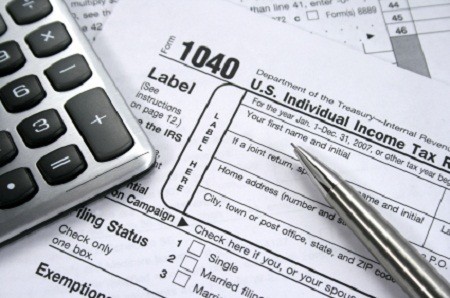 As a tax preparer, you should ask every new client to bring along a copy of last year’s return, and if available, of previous returns as well. This is especially necessary in the case of a taxpayer taking a depreciation deduction, since the depreciation rate should be consistent from year to year. Earlier returns should also give you a clue to additional deductions the taxpayer may be entitled to, or they may help you to point out possible deductions or tax saving opportunities that were missed. In the case of previous clients, you should have your own copies of previous returns to refer to.
From: Building, Marketing & Operating A Profitable Tax Practice (included in our Federal Income Tax Course)